
Blog
Home / Blog
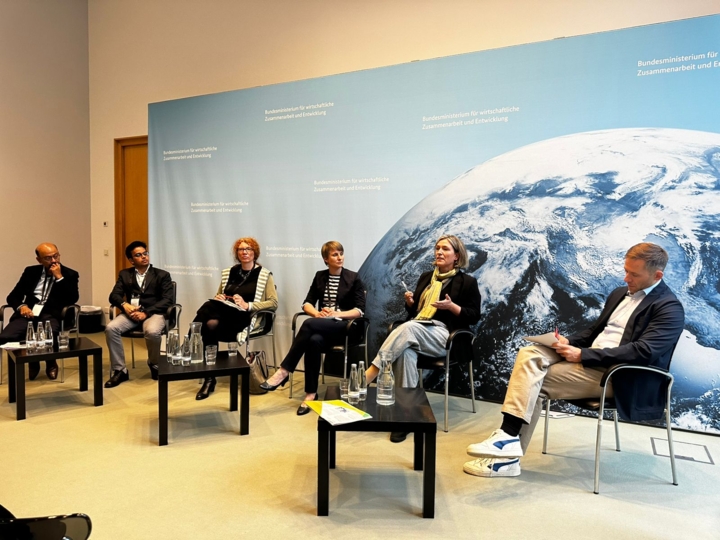
Indo-German Sector Dialogue Explores Opportunities for Cooperation in Climate Resilience and Environmental Technologies
The German Federal Ministry for Economic Cooperation and Development (BMZ), in collaboration with the Indo-German Chamber of Commerce (IGCC), hosted the Sector Dialogue on “Climate Resilience and Environmental Technologies – Leveraging Potential for Indo-German Economic Cooperation” on 7 May 2026 in Berlin. Bringing together representatives from government, industry, development cooperation organisations, financial institutions, and businesses from India and Germany, the dialogue explored opportunities to strengthen cooperation…
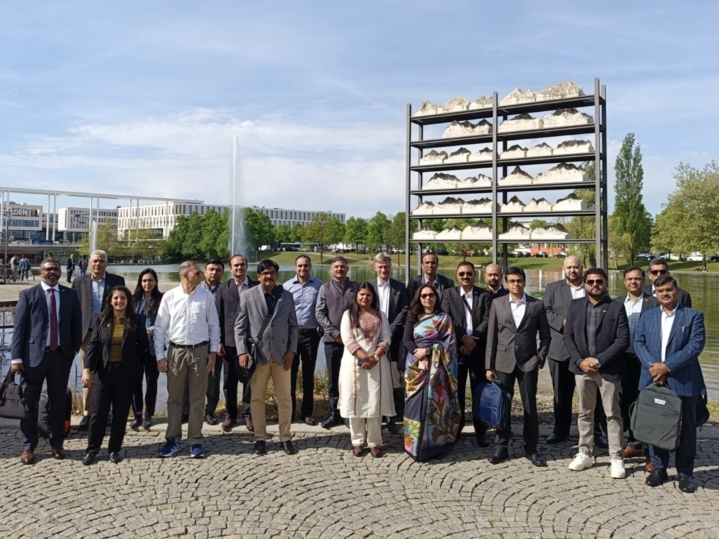
Indian Delegation Visits Germany for High-Level Exchange on Climate Adaptation, Circular Economy, and Sustainable Technologies
An Indian delegation comprising representatives from government institutions and the private sector visited Germany from 3–9 May 2026. Jointly organised by GIZ and the Indo-German Chamber of Commerce (IGCC), the programme combined a visit to IFAT Munich 2026 – one of the world’s leading trade fairs for water, recycling, and circularity solutions – with institutional meetings, technical exchanges, and high-level policy dialogue…
Sustainability, the India-EU FTA, and India’s Balancing Act
While the long-awaited agreement arrives at a significant time, the inclusion of sustainability commitments – a rarity for India, who has typically avoided including environmental and labour commitments in FTAs[i] – also reflects the realities of the current global context…
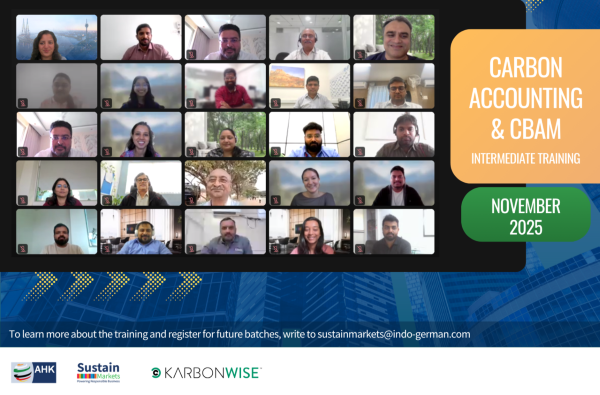
Strengthening CBAM Readiness: Highlights from our Carbon Accounting Training
As global climate regulations continue to evolve, Indian businesses are preparing for a new era of compliance, transparency, and competitiveness. With the European Union’s Carbon Border Adjustment Mechanism (CBAM) moving closer to its fully operational phase at the beginning of 2026, and India’s Carbon Credit Trading Scheme expected to be in effect…

Preparing Indian Companies for a Low-Carbon Future: Navigating CBAM and Beyond
As the global economy pivots towards decarbonisation, Indian exporters are facing mounting pressure to align with international climate standards. With the European Union’s Carbon Border Adjustment Mechanism (CBAM) on the horizon, preparedness is no longer optional, it is a strategic imperative…
Reducing Embedded Emissions: A Business Imperative for Manufacturers
As the global push for net-zero accelerates, manufacturers are under growing pressure to reduce their carbon footprint, not just from direct operations, but also from hidden emissions embedded in raw materials, production, and supply chains. For mid-sized manufacturers and exporters, tackling these embedded emissions is no longer optional…

Beyond Bluewashing: Why Tackling Informality is Key to Sustainable Supply Chains in India
Editorial by Social Compact: Across India’s industrial sector, over 50% of the workforce keeping business chains afloat comprises impermanent, contractual, and supply chain workers. These individuals often work over 12-hours a day, 6 to 7 days a week, for wages that barely exceed USD 5-7 per day. Their situation is exacerbated by the lack of job contracts and social security cover, which defines their informal status in the workforce and constitutes the bedrock of their vulnerability despite being engaged full time in formal industry.

Germany’s New Measures to Keep Both Ends of Supply Chains Safe
The German “Lieferkettensorgfaltspflichtengesetz” (Supply Chain Due Diligence Act) is a law that first took effect on January 1st, 2023. As of January 1st 2024, the law requires companies in Germany with over 1,000 employees to implement a due diligence system for their global supply chains. The due diligence system must include measures for identifying and assessing human rights and environmental risks in the supply chain and appropriate measures to prevent or mitigate these risks.

SustainMarkets: A Year of Progress in Sustainable Indo-German Business
As we bid farewell to 2023, it’s an opportune time to reflect on the milestones achieved with our members and partners. The year has been marked by innovation and steadfast collaboration in navigating the evolving realm of sustainability and responsible business. Here’s a brief roundup of what we did last year:

ESG Standards vs. the German Supply Chain Due Diligence Act: A Comparison of Approaches to Ensuring Sustainable Business Practices
ESG (Environmental, Social and Governance) refers to standards that companies and organisations are expected to adhere to, to ensure sustainable and responsible business practices. ESG standards cover a wide range of issues, including environmental protection, human rights, labour standards, and corporate governance.
Get In Touch With Us

Address: Indo-German Chamber of Commerce,
Maker Tower ‘E’ Wing, First Floor,
Cuffe Parade, Mumbai – 400005,
Maharashtra, India
Call Us: +91-20-41047-100
Email: sustainmarkets@indo-german.com


Leave us a Message
Quick Links
2026 Copyright © Indo-German Chamber of Commerce.
All Rights Reserved.